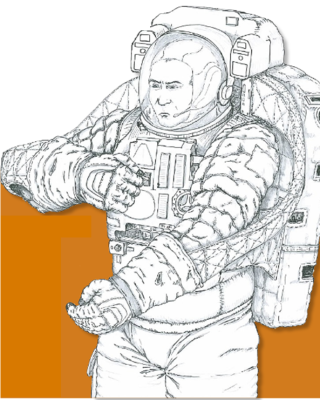
In the context of European Space Policy and its requirements regarding achieving solid technological basis and industry competitiveness, SMEs play an integral role in the research and development of new technology. To prepare for the long-term expeditions of space programmes, some critical factors should be taken into account before the launching: ensuring that astronauts are mentally and physically prepared for the missions’ demands, and maintaining them in good health during and after the mission. Unfortunately, the space environment continues to have a negative effect on the astronauts’ health. Therefore, the SPAMUS consortium has identified the need for developing a new type of astronauts’ suit, a “smart-suit”, which will mitigate the pernicious effects of weightlessness and motor inactivity. The project will utilise existing terrestrial experience in Shape Memory Alloys (SMA)/Electroactive Polymer (EAP) technology, and built upon this knowledge to develop an effective solution for usage in space. This adaptation will include substituting conventional hydraulic actuators for those based on biometric sensors, and control features. The overall objective is to analyse the suitability and to bring experience on the SMA and EAP based actuation technologies addressing terrestrial applications, to research in new concepts of artificial muscles for biofeedback astronauts’ suits, as an alternative to current technologies. To effectively adapt the current technology to on-board space requirements, and to make the electromechanical actuators of the developed artificial muscles for biofeedback suits more efficient, safer, smaller, and lighter,
the consortium will take full advantage of smart technology. Finally, the Consortium, led by ARQUIMEA, is a balanced group of SMEs and Research Institutions that will develop validated devices to have strong impact on the space industry, facilitate high-risk/high-impact research and innovation, and contribute to new research alliances